 Kraft Foods, the largest food manufacturer in America, earned sweet media coverage in 2003 when it announced voluntary steps to address childhood obesity. The Altria (Philip Morris) division, which had $34 billion in 2005 sales, promised to reduce portion sizes and end in-school marketing.
Yet, according to an article published and released free online this week in the Journal of Public Health Policy, "Kraft's efforts appear to be a mix of small improvements and business as usual."
In the article, Alexandra Lewin, Lauren Lindstrom, and Marion Nestle compare and contrast the voluntary nutrition measures and overall marketing strategies of Kraft (as a leading manufacturer) and McDonald's (as a leading quick service restaurant chain). The paper responds to a request by the World Health Organization as part of a research effort that has also included articles about global health and the food business more broadly.
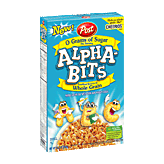
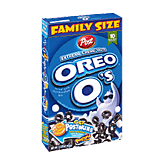 For readers who want to evaluate the article's argument for themselves, let's include some links. For example, Lewin and her colleagues note the contrast between the public relations campaign surrounding the low-sugar reformulation of Alpha-Bits cereal -- promoted as a childhood literacy tool of all things -- and the real-world marketing, instead, of the high-sugar Oreo O's with Marshmallow Bits. Follow the links to compare the Nutrition Facts panels for the two products, and then enter your zip code in Kraft's convenient "Find Store" query box at the bottom of each page, to discover how many stores near you carry each product.
Similarly, while Kraft has promised to end in-school marketing, that promise does not imply an end to the company's vigorous efforts to reach children. Evaluate for yourself the sites whose mix of advertising and children's entertainment Lewin and colleagues discuss, including TheCheesiest.com, Nabiscoworld.com, and Postopia.com.
Do Kraft's voluntary efforts to improve its nutrition profile offer a promising low-burden market-oriented solution to contemporary nutrition problems, or just empty public relations? Comments are open.

0 comments:
Post a Comment